
How to Plan a Sweet 16 Party Menu Teens and Parents Both Love
A Sweet 16 party menu has to satisfy two very different crowds at the same time. Teens want food they can grab, share, and photograph without sitting through a formal seated course. Parents want a spread that looks polished, feeds every guest, and stays inside a set budget. Those goals sound opposed, but they overlap far more than most hosts expect once the planning starts. The real trick is choosing dishes that hold well in Central Florida summer heat, serve quickly through a line, and still look impressive on a table. Hosts in the Orlando area also deal with humidity, afternoon storms, and outdoor spaces that climb past 90 degrees by early afternoon in July and August. A menu built around those conditions keeps food safe, keeps the line moving, and keeps guests happy from the first arrival to the last dessert plate. Smart planning starts with an accurate headcount, moves into service style, and finishes with a timeline that matches the party schedule instead of fighting it.
How to Build a Sweet 16 Party Menu That Teens Actually Eat
Teen guests eat very differently than adult guests at a catered event. They graze in waves, circle back to the table four or five times, and rarely commit to one full plate. Most of the eating happens in the first hour, then again late in the night after dancing and photos have worn everyone out. A menu built for that pattern uses small portions, handheld items, and stations that stay open rather than a single timed service. Flavor matters, but familiarity matters more with a room full of 15 and 16 year olds. Recognizable food gets eaten; unfamiliar food gets photographed and abandoned on a side table. The strongest teen menus pair three or four crowd favorites with one or two elevated items that make the whole spread feel special. Portion sizing and refill timing then keep the table looking full and abundant for the entire event.
Sweet 16 Party Menu Ideas That Teens Actually Eat
Handheld food wins every single time with a teen crowd, and it is not close. Sliders, chicken tenders, mini pizzas, taco stations, mac and cheese cups, and pasta cups all travel well from a table to a chair to a dance floor. Anything that requires a knife slows the line and usually ends up half eaten in the trash. A build your own taco station is one of the strongest options for a summer Sweet 16 because guests assemble their own plate and the line almost never stalls. Warm proteins hold safely in chafers while toppings stay chilled over ice in a separate section. That setup also quietly solves the picky eater problem, since a guest can take nothing but meat, cheese, and a tortilla if that is all they want. Sliders follow the same logic and scale cleanly from 30 guests up to 150 without changing the equipment. Wings, street corn cups, and loaded fry stations round out the savory side with almost no complaints from the guest of honor.
The grazing table is the piece that gets photographed and posted before anyone touches a fork. A well built board layers cured meats, sliced cheeses, fresh fruit, berries, crackers, dips, olives, nuts, and honey across a long surface with real height and color variation. Teens love it because it requires zero commitment; they take three bites, walk away, and return twenty minutes later for something different. Parents love it because one table covers appetizers, snacks, and late night grazing all at once. Fresh fruit and berries perform especially well at summer parties since they read light and refreshing when the room is warm. Cheese should be pulled from refrigeration roughly 30 minutes before service so it hits proper flavor without sitting out too long. A grazing table also fills visual space beautifully in a backyard or clubhouse that would otherwise feel empty. Want a centerpiece spread that doubles as decor? Click here for our grazing table service.
Dessert deserves its own planning conversation instead of an afterthought. Teens gravitate toward small format sweets like cake pops, brownie bites, cookies, macarons, chocolate covered strawberries, and mini cheesecakes. Small portions mean guests try four things rather than committing to one large slice they will not finish. The cake itself functions as a photo moment and a program moment, so it should be cut and served on a set schedule rather than left to chance. Plan one slice per guest plus about ten percent extra for seconds and takeaway boxes. Chocolate coatings and buttercream soften quickly in Florida humidity, so dessert should stay in a cooled area until roughly 20 minutes before it is served. A dessert table placed away from the main buffet also splits traffic and prevents one crowded bottleneck. Late night sweets keep energy up during the last hour when the savory food has already been cleared.

Sweet 16 Party Menu Portions and Headcount Planning
Portion planning starts with a firm headcount and an honest read on the guest list. Teens eat in higher frequency but smaller volume, which means more pieces and smaller sizes rather than larger plates. For appetizer style service before a meal, plan roughly 4 to 6 ounces of grazing table food per guest. When the grazing table is the meal itself, that number climbs closer to 8 to 10 ounces per person. Cheese alone runs about 2 to 3 ounces per guest in an appetizer setting. Passed or stationed bites typically land at 6 to 8 pieces per person across the first hour of a party. Adult chaperones and family members eat larger portions but eat far less often, which usually balances the total out. Building the count around both groups prevents the two most common outcomes, which are running out at hour two or throwing away half the food.
Service style changes portion math more than most hosts realize. A buffet line encourages larger self served portions, so buffet menus need roughly 15 to 20 percent more food than the same menu served by staff. Stationed service controls portions naturally because a server plates each item at a consistent size. One serving line handles about 50 to 75 guests comfortably, and a double sided line moves roughly twice that speed. Adding a second line for a party of 100 cuts wait times dramatically and keeps teens from crowding the food area. Drink planning matters too, since teens go through beverages fast in summer heat. Plan about 3 non alcoholic drinks per guest across a four hour party, with more if the event is outdoors in the afternoon. Water stations should sit separately from the soda and mocktail area so nobody waits in line just for water.
Leftovers are worth planning on purpose rather than by accident. A properly portioned Sweet 16 menu should end with a small surplus, not a mountain of untouched trays. Food that has been sitting in the temperature danger zone between 41 and 135 degrees for over two hours should not be saved, and that window shrinks to one hour when the ambient temperature is above 90 degrees. That rule alone eliminates most of the guesswork about what goes home. Items like cured meats, dips, and cut fruit have a short safe window once they leave refrigeration, so those trays should be refreshed in rotation instead of set out all at once. Bringing out half the grazing table at the start and the rest at the ninety minute mark keeps everything fresh and the table full. Desserts and packaged sweets travel home easily and make good party favors. A caterer tracking those timings during service takes the entire question off the host’s plate.
Sweet 16 Party Menu Allergy and Dietary Planning for Teen Guests
Allergy planning is not optional at a party full of teenagers. Federal labeling law recognizes nine major food allergens: milk, eggs, fish, crustacean shellfish, tree nuts, peanuts, wheat, soybeans, and sesame. Nut allergies in particular show up often in this age group and can be severe. A grazing table loaded with nuts, honey, and cheese needs clear labeling and physical separation from allergen free options. The safest approach is placing nuts in their own bowls at one end of the table rather than scattered throughout the arrangement. Serving utensils should never be shared between allergen containing and allergen free items. Labeled cards in front of each item let guests self screen without asking the host a dozen questions. Parents notice that detail immediately, and it builds enormous trust in how the event was planned.
Dietary preferences beyond allergies have become standard among teen guests. Vegetarian, vegan, gluten free, and halal requests are common enough now that every Sweet 16 menu should include options by default. A good rule is making at least 20 percent of the menu naturally vegetarian and at least a few items naturally gluten free. Fresh fruit, vegetable crudites, hummus, grilled proteins, and rice based dishes cover most of those needs without a separate custom menu. Corn tortillas at a taco station instantly serve gluten free guests with no extra cost. Labeling those items clearly matters just as much as offering them. Nothing frustrates a guest faster than a table full of food they cannot identify or safely eat. The goal is inclusion built into the main menu instead of a sad separate tray in the corner.
Collecting dietary information early prevents scrambling in the final week. The invitation or RSVP form should ask directly about allergies and restrictions, and that list should reach the caterer at least two weeks before the event. Late additions are workable, but sourcing specialty items on 48 hours notice raises cost and limits choices. Parents of guests with severe allergies usually appreciate a direct conversation about kitchen practices and cross contact. Documenting the responses in one place, then confirming them at the final menu meeting, closes the loop cleanly. A professional catering team will ask these questions without being prompted. That habit is one of the clearest signals separating an experienced caterer from an inexperienced one.
How to Plan a Sweet 16 Party Menu Parents Will Approve
Parents are the ones funding, hosting, and cleaning up after a Sweet 16, so the menu has to work for them too. Their concerns are practical: cost per head, food safety, service flow, and how much work lands on them during the party. A menu that looks stunning but requires the host to run trays in and out of a kitchen for four hours has failed. Summer parties in Florida add real pressure because heat, humidity, and sudden storms all affect how food holds. Budget clarity is the other major factor, since Sweet 16 costs escalate quickly once venue, decor, photography, and entertainment stack up. The right menu delivers a genuine wow moment while keeping the per person number predictable. Timing is the last piece, because food that arrives at the wrong moment throws off the entire party schedule. Planning all four of these together produces a menu parents feel good about paying for.
Sweet 16 Party Menu Food Safety Rules for Hot Summer Parties
Summer heat is the single biggest food safety factor for a Florida Sweet 16. Hot foods must be held at 135 degrees or above, and cold foods must be held at 41 degrees or below. The space between those numbers is the temperature danger zone where bacteria multiply fastest. Food sitting in that range for more than two hours should be discarded, and that limit drops to one hour when the surrounding temperature passes 90 degrees. Outdoor July and August parties in Central Florida routinely exceed that threshold by early afternoon. Chafing dishes with fresh fuel, ice baths under cold platters, and shaded or covered service areas are the practical fixes. Direct sun on a grazing table will soften cheese and wilt greens within twenty minutes. Positioning the food under cover, indoors, or in deep shade solves most of the problem before it starts.
Rotation strategy protects both quality and safety at a summer event. Rather than setting out every tray at once, food should come out in staged waves timed to guest arrival and the party schedule. A caterer holding backup trays in a cooled staging area can refresh the table three or four times across the event. This keeps the spread looking abundant in photos taken at hour three, not just hour one. It also means no single tray sits out long enough to become a risk. Cut fruit, dairy based dips, seafood, and cured meats need the tightest rotation because they degrade fastest in humidity. Breads, crackers, nuts, and dried fruit are far more forgiving and can hold longer. Managing that rhythm during a party is difficult for a host who also wants to enjoy the event.
Storms are a Florida planning reality, not a rare event. Afternoon thunderstorms roll through Central Florida on most summer days, often between two and six in the afternoon. Any outdoor Sweet 16 menu needs a covered backup plan for the food area specifically, separate from the guest seating plan. Tents, covered patios, garages, and indoor kitchens all work as long as they are decided in advance rather than mid downpour. Wind is the underrated threat, since it knocks over lightweight signage, blows napkins, and cools chafers unevenly. Weighted linens, covered trays, and sturdy display pieces prevent most of that. A quick relocation plan for the dessert table matters even more, because sugar work and chocolate suffer immediately in rain and heat. Want a dessert spread built to hold up at a summer party? Click here for our dessert catering service.
Sweet 16 Party Menu Budget and Cost Planning for Parents
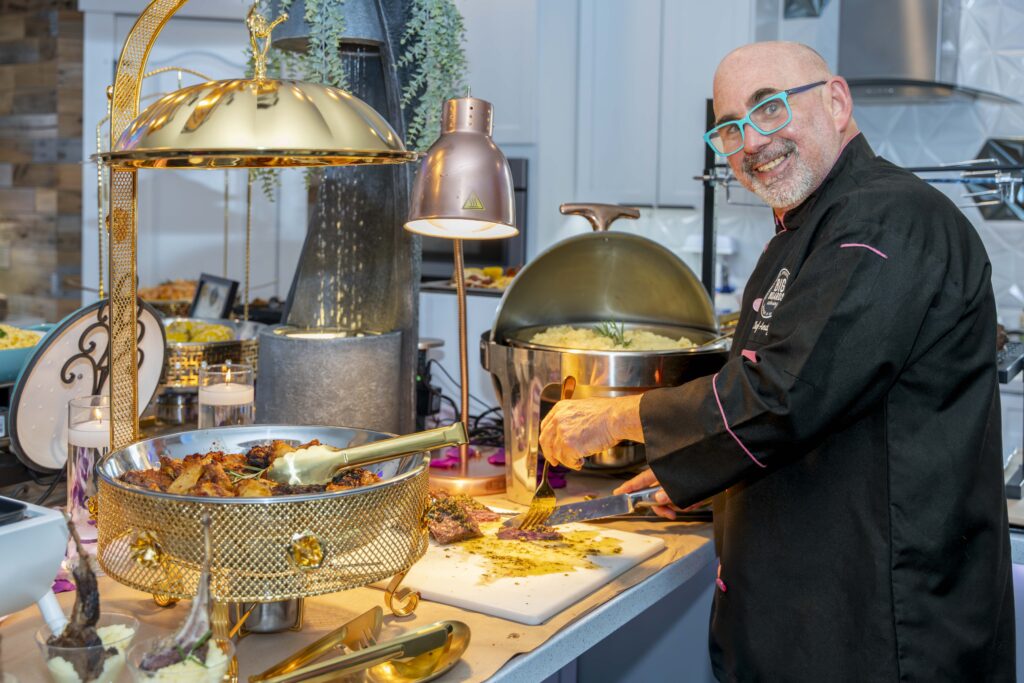
Sweet 16 catering costs are driven by four things: guest count, menu complexity, service style, and staffing. Guest count moves the number the most, so locking a final headcount roughly ten days out protects the budget. Menu complexity is the next lever, since dishes requiring extensive labor or premium ingredients raise cost faster than dishes requiring volume. Service style changes the staffing requirement, which is often the hidden line item hosts do not anticipate. Drop off catering costs the least and asks the most from the host during the party. Full service catering costs more up front and removes nearly all party day labor from the family. Most Sweet 16 parties land somewhere between those two, with a stationed setup and light staffing for refreshes and cleanup. Knowing which model fits the family before requesting a quote makes the numbers far easier to compare.
Smart substitutions cut cost without cutting impact. A grazing table with generous fruit, crackers, dips, and mid tier cheeses looks nearly identical in photos to one loaded with premium imported selections. Chicken based proteins cost meaningfully less than beef or seafood while satisfying a teen crowd just as well. Serving one signature hot station rather than three reduces equipment, labor, and waste in a single decision. Small format desserts stretch further per dollar than large individual portions. Beverages are another quiet budget drain, so a curated selection of three or four options beats an open ended variety. Rentals for plates, linens, and serving pieces should be priced early since they are easy to forget until the final week. Trimming in these areas preserves the visual impact that actually matters to the guest of honor.
Timing affects price more than most families expect. Peak Sweet 16 season overlaps with wedding season and graduation season, which tightens caterer availability from spring through early summer. Booking six to eight weeks out gives real menu flexibility, while booking two weeks out narrows the options and can add rush costs. Weekend evening slots are the most requested, so a Friday evening or Sunday afternoon party sometimes opens better availability. Fall and winter dates also tend to have more room on a catering calendar than late spring. Confirming the final guest count on schedule avoids paying for plates nobody eats. A clear written quote listing food, staffing, rentals, delivery, and service fees prevents surprises after the event. Parents who ask for that breakdown up front almost always end up happier with the final invoice.
Sweet 16 Party Menu Timeline and Service Flow for the Host
A good Sweet 16 menu timeline is built backwards from the party schedule. Arrival, photos, dinner, cake, and dancing each need food to be in a specific state at a specific moment. Guests typically arrive across a 30 to 45 minute window, so light grazing food should be ready before the first car pulls up. Hot stations open around 45 to 60 minutes in, once most of the room has arrived and settled. That gap gives late arrivals something to eat while preventing the main food from sitting out too early. The cake moment usually lands two to three hours into the event, after dinner and before the dancing peaks. Late night snacks work best in the final hour when energy dips and guests get hungry again. Writing that sequence down and sharing it with the caterer removes almost all party day confusion.
Traffic flow around the food determines how the whole party feels. The food table should never sit against a wall in a narrow space, because that creates a single choke point with no exit. Placing the grazing table in an open area with access on both sides doubles throughput instantly. Drinks belong in a separate zone entirely, since beverage traffic runs constant while food traffic comes in bursts. Plates, napkins, and utensils go at the start of the line, and desserts stay in their own area away from savory service. Trash and bussing stations placed near seating keep the space clean without staff hovering over guests. Small layout decisions like these prevent the crowding that makes a party feel chaotic. A caterer who walks the space in advance catches these issues before they happen.
Party day labor is the factor parents underestimate most consistently. Setup for a full grazing table and station service typically takes 60 to 90 minutes before guests arrive. Refreshing trays, monitoring temperatures, and bussing plates continues through the entire event. Breakdown, packing leftovers, and cleaning the service area adds another 45 minutes or more after the last guest leaves. That is several hours of work the host is not spending with their child on a milestone day. Staffing ratios of roughly one server per 20 to 25 guests handle a buffet or station setup comfortably. For a party of 60 to 80 guests, that means two or three staff members covering everything. Handing off that entire workload is the single biggest quality of life upgrade a family can buy for a Sweet 16.
Why You Need Professional Sweet 16 Catering for Your Party Menu
A Sweet 16 happens once, and the day moves faster than anyone expects. Professional catering handles the food, the timing, the temperatures, and the cleanup so the family can actually be present for it. The visual impact of a professionally styled grazing table and station setup is also genuinely difficult to replicate at home. Guests notice abundance, presentation, and food that stays fresh from the first hour to the last. Behind that presentation sits real work in sourcing, prep, transport, holding, and service. Hiring that out converts a stressful hosting day into an event the family gets to enjoy alongside everyone else.
What Sweet 16 Catering Covers on Party Day
Professional Sweet 16 catering starts well before the party with menu design, sourcing, and prep. The team arrives early, builds the display, sets holding equipment, and stages backup trays in a cooled area. During service, staff monitor temperatures, refresh platters on a rotation, and keep the table looking full for photos taken at any point in the night. Plates, utensils, napkins, and serving pieces are handled as part of the setup rather than a last minute grocery run. At the end, the team breaks down the display, packs leftovers safely, and leaves the service area clean.
Coordination with the rest of the vendor team is part of the job. Caterers work around photographers who need the cake moment lit and staged, DJs who control the party timeline, and venues with their own load in rules. That coordination keeps the schedule intact when one element runs behind, which happens at nearly every event. A caterer who has run dozens of teen parties knows how the timing typically slips and builds slack into the plan. Allergy and dietary requests are tracked from the planning stage through service.
Problem solving during the party is where experience really shows. Guest counts run over, storms arrive early, and equipment occasionally fails. An experienced team adjusts portions, relocates a table, or reworks a service order without the host ever hearing about it. That quiet competence is most of what a family is paying for. The visible result is a party where the food simply works.
How to Book Sweet 16 Catering for Your Party Menu
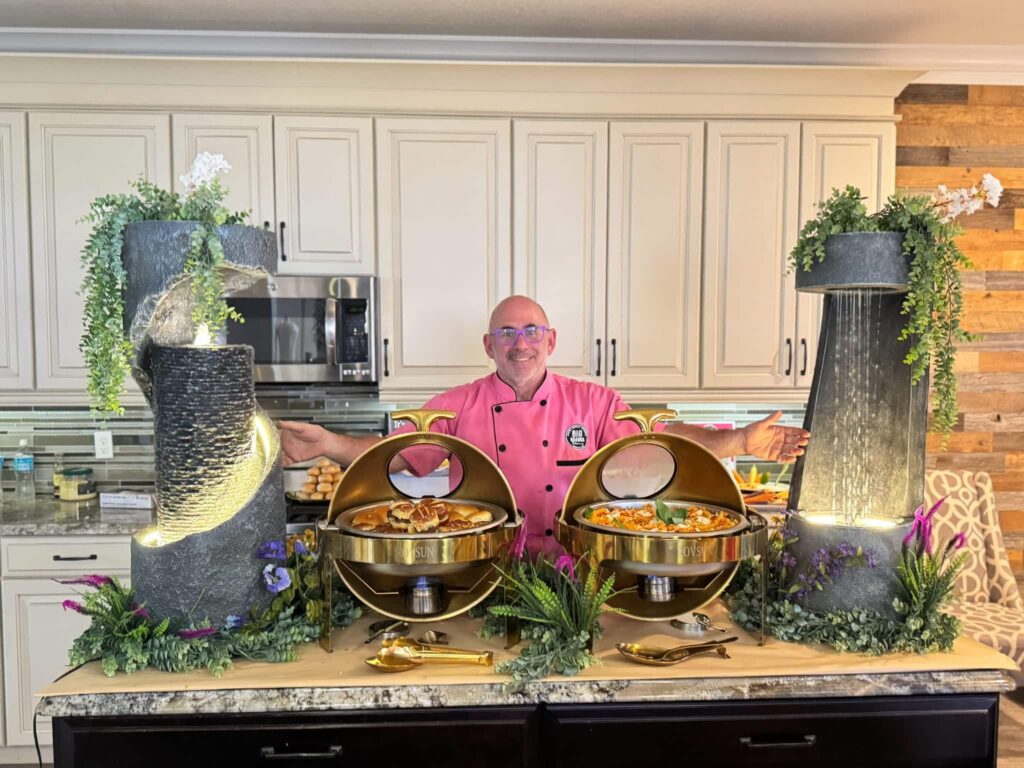
Booking starts with a conversation about date, guest count, venue, and the style the guest of honor wants. From there, the menu gets built around the service format that fits the space and the budget. A written proposal should list every food item, staffing level, rentals, delivery, and any service fees clearly. Reviewing that document carefully prevents every common billing surprise. Most Sweet 16 events benefit from booking six to eight weeks ahead, especially for weekend evening dates.
The final two weeks handle details rather than big decisions. Guest count gets confirmed, dietary requests get finalized, and the party timeline gets locked with the other vendors. A venue walkthrough or floor plan review settles table placement, power access, and load in logistics. Those details are small individually but they determine how smoothly the day runs. Confirming them early leaves the last week free for decor and family logistics.
Serving the greater Orlando area means covering a wide range of venues and neighborhoods. Backyard parties, clubhouses, event halls, and rental venues each come with different equipment and access considerations. Knowing those conditions in advance shapes the menu and the setup plan. Ready to lock in the food for your daughter’s milestone birthday? Click here for our Sweet 16 catering service.
Why Choose Big Boards Catering for Your Sweet 16 Party Menu
Big Boards Catering builds Sweet 16 menus around what teens actually eat and what parents actually need. Grazing tables are our specialty, and they solve the two biggest challenges of a teen party at once by delivering a photo worthy centerpiece and continuous food access. Menus get built to the specific guest list, including allergy and dietary requirements collected during planning. Portions, staffing, and timing are planned around the real party schedule instead of a generic template.
Florida summer conditions shape every decision we make about setup and service. Holding temperatures, shade placement, rotation timing, and storm contingencies are handled as standard practice, not as an afterthought. That approach keeps the food safe and keeps the table looking full through the entire event. Families get a spread that photographs beautifully at hour one and hour four.
We serve Clermont, Orlando, Winter Garden, Windermere, Kissimmee, Celebration, and communities across Central Florida. Every proposal spells out food, staffing, and fees in writing so parents know exactly what they are paying for. Reach out to start planning a Sweet 16 menu that fits your budget, your venue, and your daughter’s vision. Call us at (954) 778-0456 or email andy@bigboardscharcuterie.com to check availability for your date.